
Center for Regulatory Ingenuity
Getting rules and regulations right is harder than ever. And yet they are essential to a functioning and prosperous society.
Let’s take, for example, our country’s foundational environmental laws.
They were aimed at curbing industrial pollution – not guiding the society-wide economic transition that the climate crisis demands. In addition, hyperpolarization means the once-shared goal of protecting citizens from environmental harm has been replaced by a political game with rules that whipsaw back and forth depending on who’s in charge.
So where does that leave things?


From our vantage point, we see a huge appetite for solutions that will sustain climate progress while also rebuilding trust in what government can do – in faster, better, and bolder ways, for all Americans.
That’s the thinking behind FAS’s Center for Regulatory Ingenuity (CRI), which began to take shape in 2025.
CRI is bringing together experts on government capacity (the work of making government more nimble and effective at delivering on its promises) in collaboration with leaders from the climate community to write new rules for clean energy development and deployment.
Spearheaded by FAS Associate Director of Climate and Environment Dr. Hannah Safford, and FAS Director of Government Capacity Loren DeJonge Schulman, the new center is underpinned by a relentless focus on ideas that transcend political parties; regulatory solutions that are not just well conceived – but can be effectively implemented.

Hannah Safford
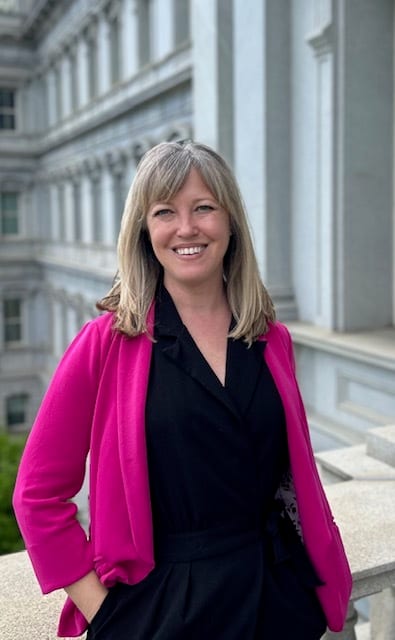
Loren DeJonge Schulman
How do we better align regulatory and industrial timelines?
Can public participation be easier and more meaningful?
What do we need to break, build, and redesign to successfully navigate the “messy middle” of the energy transition?
These are the questions CRI’s cohort of experts is tackling, crafting “policy playbooks” with the goal of getting them into the hands of motivated state, local, and private actors eager to deliver real-world results.
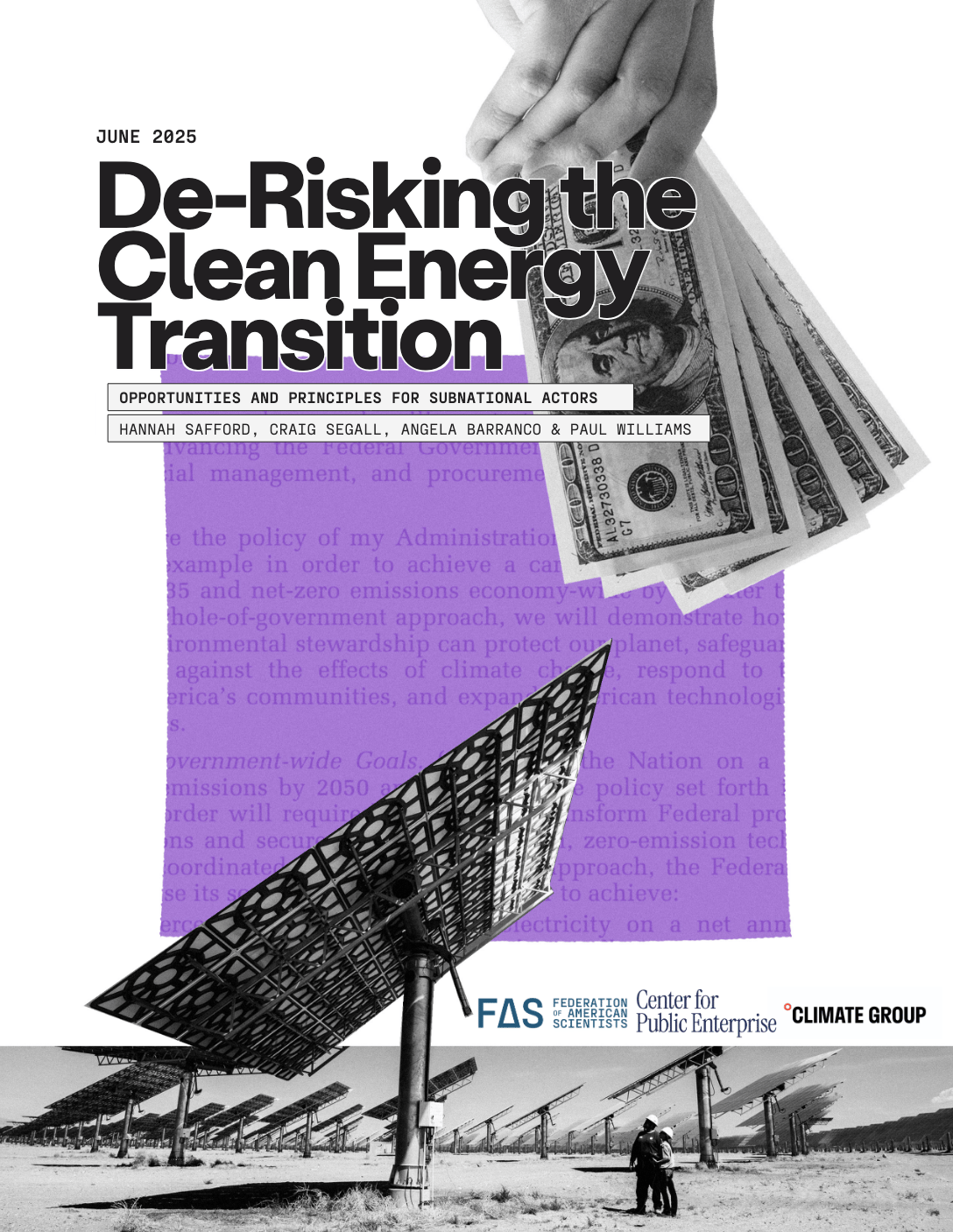
One CRI paper on practical climate finance is already shaping zero-emission truck policy in California, while both red and blue geographies are interested in how they might rapidly expand clean project pipelines through creative solicitation approaches.
Still to come: a flagship symposium in 2026 to spark more near-term efforts like this – in red, blue, and purple geographies – and to shape the national policy dialogue during what will likely be a midterm election season characterized by a hunger for fresh, constructive ideas.
But what’s most exciting about CRI goes beyond 2026, and spans wider than the climate and energy debates.
The ambition of this project stems from nothing less than a desire to radically rethink what successful government can and should be – and how to organize new networks to drive progress on seemingly intractable issues. What CRI learns and accomplishes in climate and energy policy should be just the beginning.