FAS x FLI
AI x Global Risk
There’s been plenty of discussion about new scientific discoveries and productivity boosts that will come with the advent of AI,

just as there’s been a lot of ink spilled fretting about AI’s potential to displace millions of jobs.

But what about AI’s effect on the risks that have already been worrying international experts for decades?
In the spring of 2024, Future of Life Institute (FLI) approached FAS with funding to design a series of convenings and reports to explore how artificial intelligence (AI) influences some of the challenges that both organizations felt weren’t receiving enough attention in the AI discourse: nuclear security, bioengineering, autonomy, and cybersecurity.
This project truly picked up steam in 2025, and at its heart is a simple but urgent insight:
those responsible for safeguarding national and international security often face a steep learning curve in understanding the true capabilities and risks of advanced AI.
Artificial intelligence is a dual-use technology.
It can accelerate discovery and improve safety, yet it can also amplify vulnerabilities if deployed without full comprehension of its implications.
Bridging this knowledge gap is essential to ensuring that the integration of AI into sensitive systems strengthens, rather than undermines, global security.
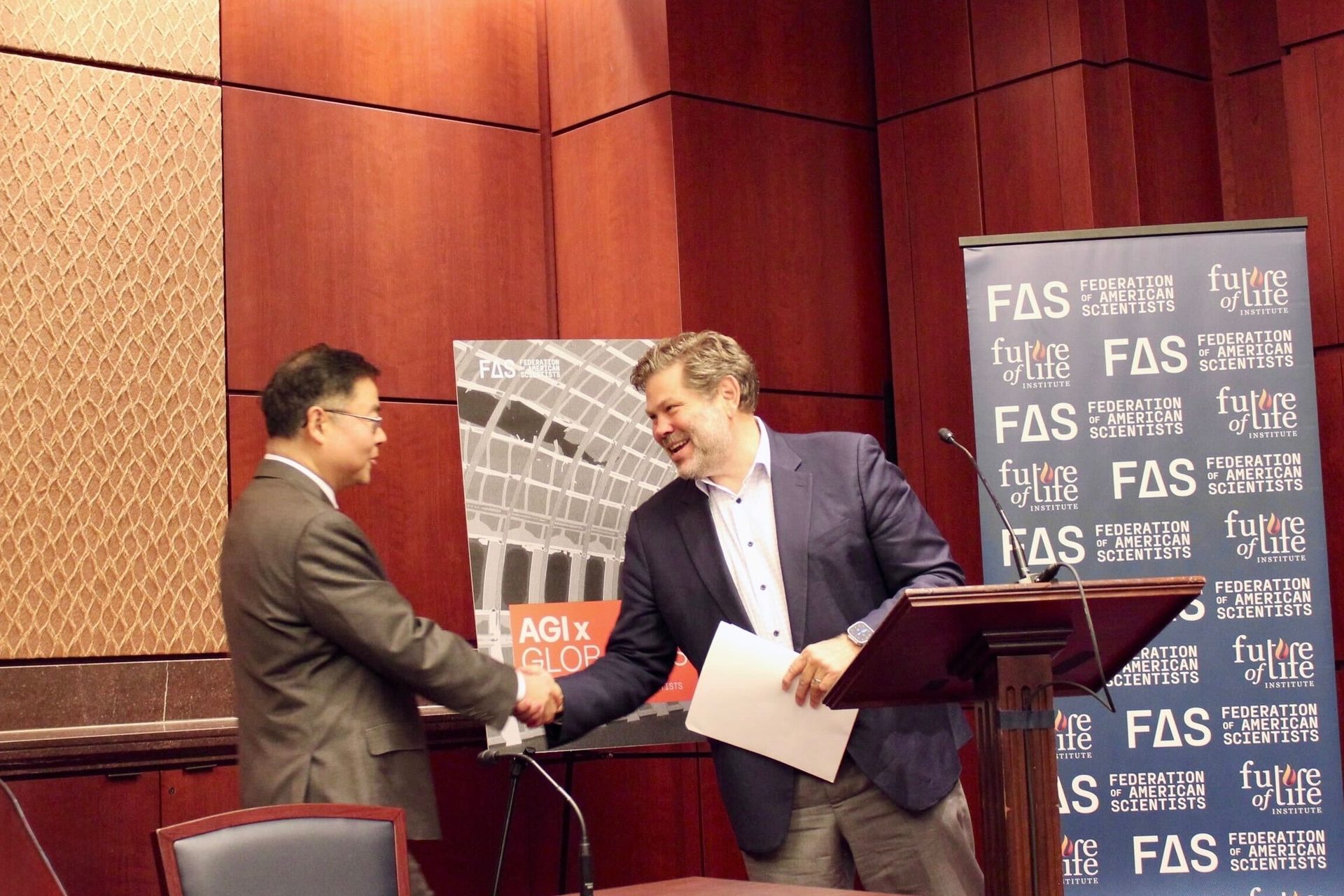

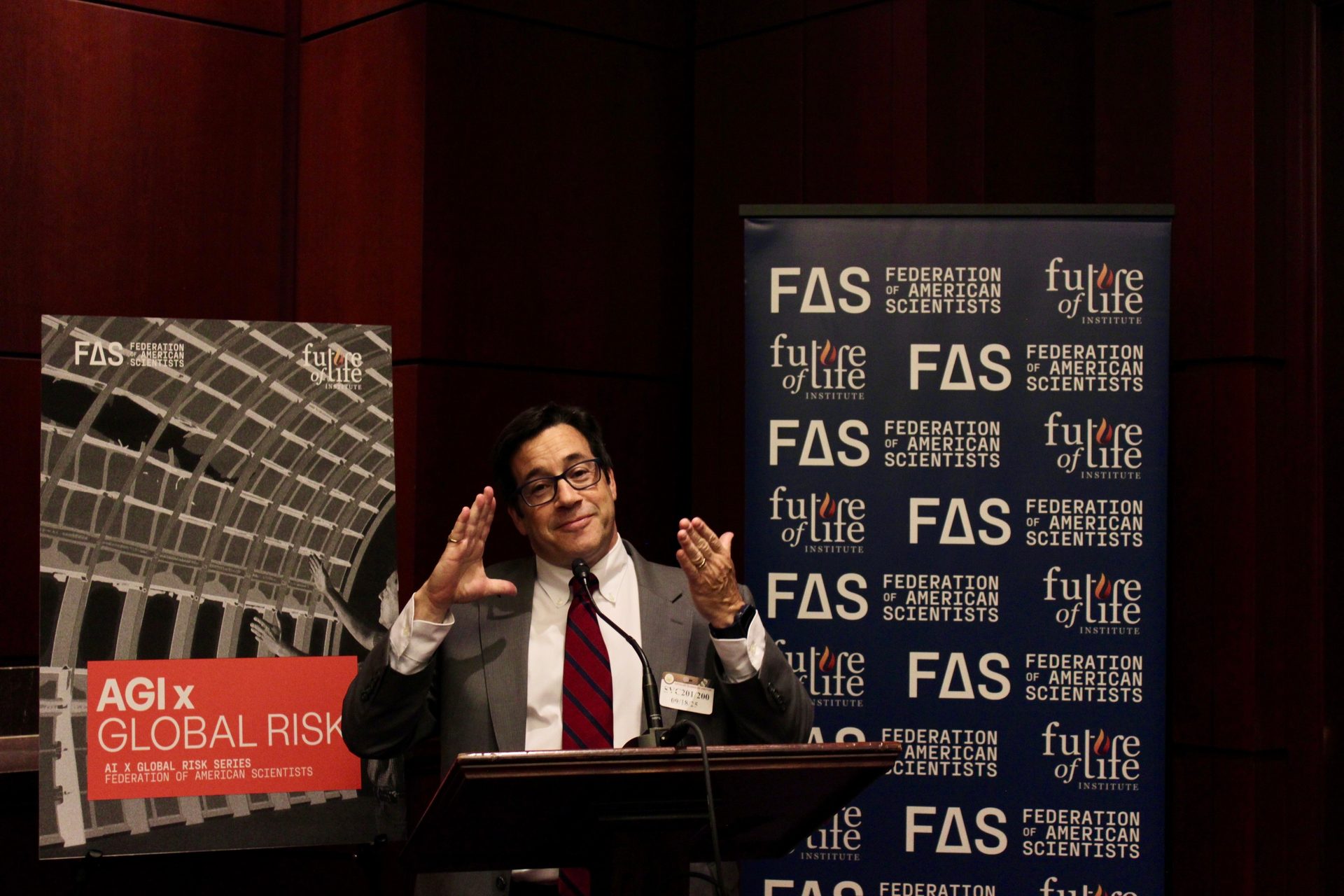
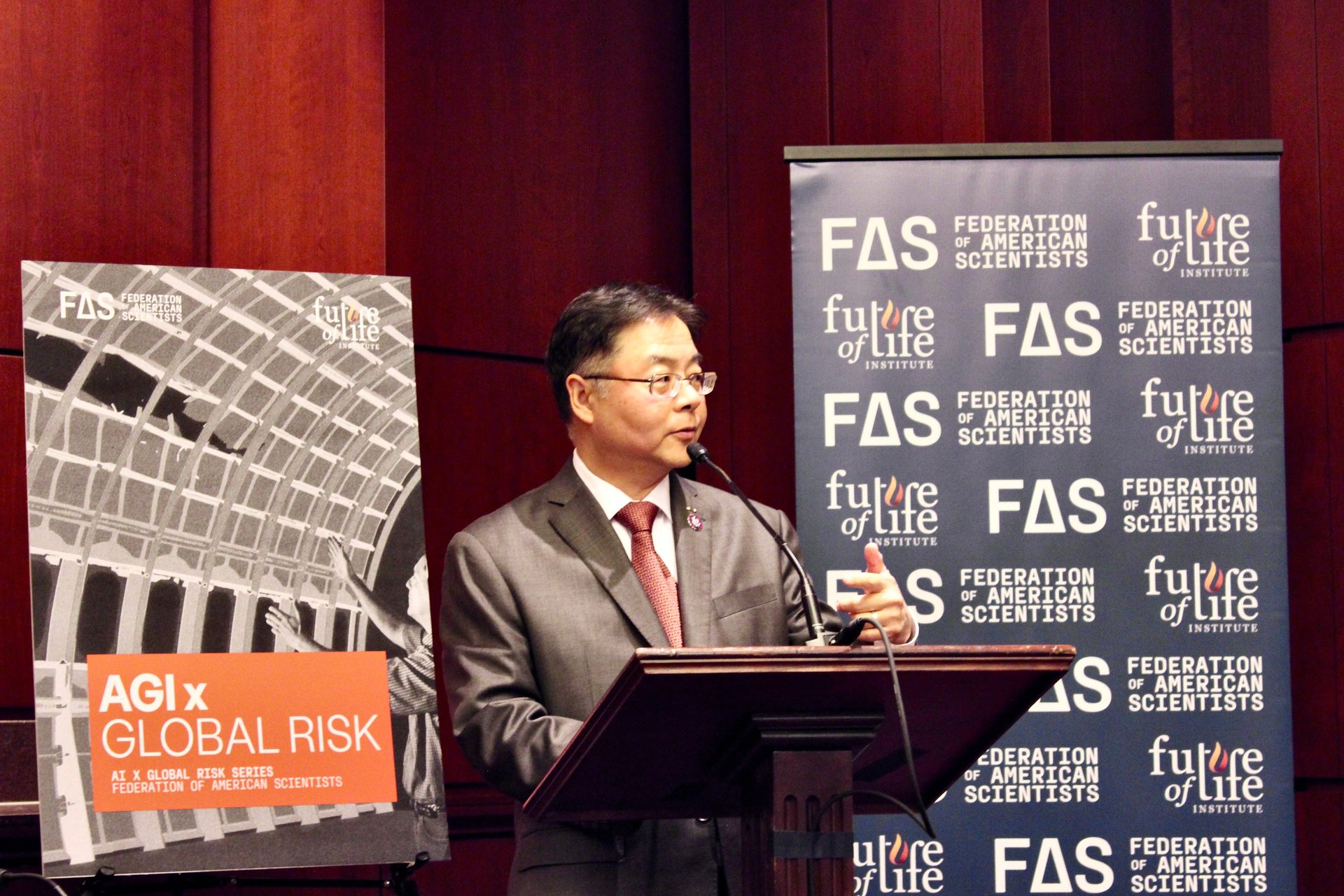
Through this initiative, FAS and FLI have brought together a cross-section of experts from academia, industry, and government to engage in rigorous, forward-looking dialogue. A series of roundtables has served as both a learning space and a policy laboratory, where insights are distilled into actionable recommendations.
These roundtables, each centered on the intersection of AI and a critical security domain, have included:
AI and
This ambitious project will conclude with an upcoming event focused on AI and Nuclear Weapons Policy, followed by the FAS x FLI Summit in 2026—a capstone gathering that will synthesize 21 months of workshops, research, and policy engagement on AI’s role in shaping global stability.
This partnership is another clear example of FAS utilizing its convening power to push sorely needed policy conversations that wouldn’t otherwise have happened.
As this project reaches a conclusion in 2026 – we’re excited not only to host a summit that brings together crucial voices to address these myriad challenges, but also to deliver a compilation of actionable policy recommendations decisionmakers can use to make the world a safer place.